Dr. Bruce the Bug Guy

Bugs are his business
  • Article by: KELLY JO McDONNELL , Special to the Star Tribune

Lino Lakes entomologist “Dr. Bruce the Bug Guy” takes his menage of bugs along with him to Twin Cities classrooms.

hide

Entomologist “Dr. Bruce” Giebink shone an ultraviolet light on one of his scorpions to show that they fluoresce a green color. This is a Black Emperor called Blackie.

Photo: David Brewster, Star Tribune

His name is Bruce Giebink. But, professionally, he’s “Dr. Bruce the Bug Guy.” ¶ “Well, the kids kept calling me the ‘bug man’ or the ‘bug guy,’ so I figured, why not?” Giebink said. ¶ The entomologist from Lino Lakes has built a successful business showing off his collection of bugs at schools. At a “Dr. Bruce the Bug Guy” show, kids can learn about hissing cockroaches while touching them, pet “Rosie” the rose-hair tarantula and get closeups of scorpions. They can even eat some bugs. Giebink says his edible bugs have been a huge hit the past few years.

“They’re special treats. I have meal worms — Mexican spice, BBQ and Cheddar cheese flavor!” he said.

Giebink has always had a love of bugs and everything outdoors.

“I was always a young naturalist,” he explained. “I grew up on a farm in Wisconsin that had woods, marsh and a pond. I thoroughly enjoyed being out in nature.”

It was that love that inspired Giebink to pursue pre-veterinarian studies at the University of Wisconsin in Madison in 1975. However, his interests changed halfway through, mainly because of biochemistry.

“The biochemistry did me in,” said Giebink. “I completed my undergrad degree in five years, and then did a lot of field research for my master’s. I completed my Ph.D. in 1987, which officially makes you an entomologist.”

Giebink ended up in the Twin Cities after accepting a research position with the University of Minnesota in 1990. However, it wasn’t until 1997 that Giebink got an idea of introducing his bugs to kids.

“I did a program for my son, who was in first grade at the time,” Giebink said. “They would bring in a parent and do a show for the class. My wife, Lisa, volunteered me to do it.

“It was so much fun, the kids had such a great time, and the teachers loved that it was hands-on and interactive. It got me off to a really good start.”

The next fall, Giebink started getting calls requesting the bug show from the Centennial School District. His hobby started turning into a full-time business. The Cub Scouts called. So did the Girl Scouts, nature centers and parents wanting him for their kids’ birthday parties.

Firm’s name: The Bug Zone

Giebink made it official in 2001, becoming “Dr. Bruce the Bug Guy,” and naming his company the Bug Zone. He targeted area libraries first. Coincidentally, the theme at the libraries that year was “What’s Buzzing at Your Local Library?” with a bug theme.

“That jump-started everything,” said Giebink. “I was getting wonderful exposure and was getting paid for the programs. It got me over the hump.”

Giebink keeps his bugs in a basement room specially heated and lit to keep them alive and flourishing. Among the room’s inhabitants are Madagascar hissing cockroaches, millipedes, centipedes, scorpions, tarantulas, cecropia moths and butterflies.

“June and July and August are by far my busiest months,” said Giebink. “September is a kind of transitional month, with summer programs winding down and school getting started. In the fall I get busy with Cub Scout and Girl Scout events, and right around Halloween I’m really busy with the creepy crawly theme.”

One of Giebink’s favorite bugs is the praying mantis. The kids’ favorite, however, might well be the tarantula.

“Kids really love Rosie the Tarantula,” he said. “It’s a very easy name to remember, and it’s a rather gentle name. She’s a rose-haired tarantula, Chilean, very beautiful. They have ideal characteristics for raising in captivity and for using in hands-on programs. Very docile, and not super nervous or skittish.”

Mainly, Giebink wants to get the message out that bugs sometimes get a bad rap.

“As a society, it’s kind of us against the bugs,” he said.

“If people learn to tolerate and co-exist, I think a lot of creatures in the natural world, insects included, would enjoy the outdoors a lot more.”

Kelly Jo McDonnell is a Minneapolis-based freelance writer.
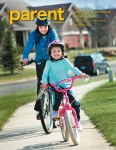
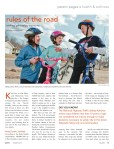
Kids & bikes – 101

MN. Parent Magazine- May Issue

Kids love to ride bikes. And Minnesota loves bicycles. Minnesota has been ranked among the top “bicycle friendly” states in the country by the League of American Cyclists. The season is short, yes. So it’s time for families to take full advantage of the bicycling seasons. But before you dust off your bikes from their winter storage place, it’s a good idea to make sure your kids are aware of some basic safety concerns. It’s not rocket science, just learning how to stay safe on the road while on two wheels.

Safety 101

(note: children less than 10 years of age are not mature enough to make decisions necessary to safely ride in the street. Sidewalk riding only is recommend-Nat’l Highway Traffic Safety Administration)

Head – Brain – Helmet

Although everyone has already heard the safety stats on wearing a helmet, here’s some more. It’s safety rule #1 for bikers, and there’s a reason that the safety stats are so prevalent. According to the Kids Health organization, 300,00 kids go to the emergency room because of bike injuries, and at least 10,000 kids have injuries that require a few days in the hospital.  Ouch. Whether you child is going out for a long ride, or just hopping on the bike to go to the neighbors house, make sure that helmet is on their head.

But don’t go buy any old helmet at the local garage sale. The U.S. government has created safety standards for them. A sticker should appear on the helmet saying it has met standards set by the Consumer Product Safety Commission (CPSC). The helmet should also fit properly (not be too big or too small). The helmet should sit level on your forehead. Kids might want to tip the helmet back so it doesn’t hug the forehead. I’ve even been guilty of this, as it doesn’t pull my hair as much….but if the forehead is showing, the helmet isn’t doing the job. And a reminder to little boys who love wearing their Twins baseball hats in the summer. NO wearing your hat under your bike helmet. The strap also should be adjusted so it’s snug under your chin. They shouldn’t be twisted or loose. If the straps are hanging to the sides of the helmet, the helmet is likely to fall of your child’s head when they need it most.

And if your child still whines about wearing the helmet, remind them that bike helmets are WAY cooler now than they were back in the 70’s and 80’s. Today’s helmets are lightweight and come in super cool colors for both girls and boys. My son loves to personalize his with his favorite Transformers stickers. Better yet, how about reflective stickers since they will make your child more visible to people driving cars.

Be Seen – Be Safe

Kids should be riding only during the day.  Their smaller bikes and bodies are harder for drivers to see. Some precautions that can be taken either in early morning hours or dusk can include bright clothes and reflectors. Bright clothes and reflectors of all kinds can be found in most stores. It’s important that other people on the road see your kids.

And avoid riding at night. If you must ride at night, wear reflectors on the front and rear of your bicycle.  Most states have laws requiring bicyclists to use lights and/or reflectors during nighttime hours. The laws do differ from state to state on how bright the lights need to be and where they are located.  (note: MN. Statute 169.222- requires front-facing white light visible from 500 feet; attacked to the bike or the rider; rear-facing red reflector; reflectors on each side of both pedals; 20 square inches of reflectors on each side of the bicycle. A red-flashing rear lamp is optional)

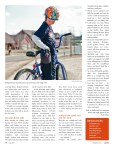
Also, make sure nothing is dangling while your child rides his or her bike. You don’t want things to get caught up in the bike chain, including loose pant legs, shoelaces or backpack straps. Kids shouldn’t wear sandals, or worse, flip flops when riding. NO bare feet, please. Take it from this author, who broke her leg by getting it caught in the bicycle spoke when she was 6…no dangling.

Rules of the Road- not just for cars

Bicycles are considered vehicles in many states, and have the same rights AND the same responsibilities to follow the rules of the road as motorists. Especially if your riding in a more populated area (a busy Minneapolis park), or riding on a busy city street versus a bike path. Kids should be aware of these basic rules, and be sure to follow them yourself if your all out on a family bike ride:

  • Go with the flow of traffic, not against it.
  • Obey all traffic laws, including stop signs, signals and lane markings
  • Attention kids-  watch out for those parked cars! Ride far enough out from the curb to avoid the unexpected, like the door opening suddenly, or the car pulling out.
  • Look before you turn. When turning right or left, always glance behind you for a break in the traffic, then signal before making the turn. Keep an eye out for left or right-turning traffic.
  • Keep an eye out for possible path or road hazards. Potholes, rocks, gravel, leaves and broken glass are everywhere. All these hazards can cause a wipe out.
  • Control your vehicle…or bike. ALWAYS ride with both hands on the handlebars. Older kids who ride frequently can graduate to just one hand, but never 0 hands! You might even suggest your child wear riding gloves, it will help them grip the handlebars better. And they’ll look like a professional. Cool.
  • Carry your books and other items in a bike carrier, or a backpack.
  • No crazy driving! Be predictable, not unpredictable. Ride in a straight line and not in and out of cars. Signal your move ahead of time.
  • And last but not least….no wearing headphones while riding the bike. Music can distract kids from the noises around them, such as a car honking its horn so they can get out of the way.

Armed with safety information, your kids will be able to enjoy the Minnesota biking season. Did I mention it’s short? Get out there and enjoy!

Suggested websites:

www.kidshealth.org

www.bicyclesafe.com

www.bicyclinginfo.org

www.livestrong.com

www.nhtsa.gov

www.mndnr.gov/trails