So proud and grateful to be working with such a great team! Minnesota Bound won for Best Magazine Show, so as Producer, I get to have some hardware! Personally, this Emmy #6 for me – and I’m entering into year #27 at Minnesota Bound. I’ll take it! #grateful #IwasyoungwhenIstartedthisjob #uppermidwestemmys
Uncategorized
Mentoring Matters
Laura Yuen did a fabulous job on this feature on the girls! SO proud of them telling their story!
Yuen: Homeless no more, these Minnesota twins are now starting college
By Laura Yuen Star Tribune
September 2, 2022 — 9:41am

Their predicament was so heartbreaking, so absurd, that Emily and Courtney Goude coped the only way they could.
The twin sisters had squished the contents of their entire lives into garbage bags. They were lugging their stuff out of Courtney’s rusty PT Cruiser, about to crash at a friend’s place, because an altercation with their mother left them with no place to sleep in the middle of a Minnesota winter.
As they gathered their plastic sacks, the sisters’ eyes locked. That’s when they lost it.
“We just could not stop laughing,” Courtney recalls.
“If you told this to a friend, they would say, ‘This isn’t funny. This is sad,'” Emily says.
But it lightened their suffering, if just for a minute, to joke about their situation: homeless together at 17.
The Goude twins have always been a rock for each other, and they’re counting on that bond, and a tiny posse of supporters, to propel them through the next four years.
They started school Monday, just months after they became homeless, as first-year students at the College of St. Benedict in St. Joseph, Minn. They are best friends — and now, college roommates.
The start of the school year always carries the whiff of possibility. Those bound for university life can find their friends, pursue intellectual curiosity and learn who they are. But for Emily and Courtney, it represents something so promising that you almost ache for it. It’s a bridge to a future with avenues they haven’t even imagined for themselves.
“I know I’m going to spread my wings into the person I’ve always wanted to be,” Emily said, just minutes after getting out of her first class on Monday. “I’m excited to meet new people and create a new life for myself.”
If they can pull off a four-year degree, “that would be huge,” Courtney said, “because no one in our family has graduated from college.”
When they were born, Emily came out first, 25 minutes before Courtney. Today they are both athletic, at 5 feet 11, and wear their hair in long beachy waves. They are identical twins, with identical voices (my transcription software can vouch for that), but they point out to me that Courtney has a nose ring; Emily bleaches her hair a lighter blond.
Now in a dorm room decorated with holiday lights and selfies with friends, Emily’s eyes start to tear up. “I’m probably going to cry a lot,” she explains from her bunk bed. Courtney pats her on the knee.
They don’t talk about this often.
“We have a very special bond,” Emily says. “As much as someone can hear about what we’ve been through the last eight months, the only person who will ever really know completely is Courtney.”
“Stuff has been happening even before January,” says Courtney.
“Literally our whole lives,” says Emily.
Their dad left them when they were young, and their relationship with their mom had become toxic. Chaos in their Spring Lake Park home meant it was hard to focus on school. Emily was depressed, even suicidal. The sisters were already planning to move out, when on the night of Jan. 14, things escalated. It ended with them locked out of the house, and a threat to throw out all of their stuff if they didn’t pick it up the next day. (I was hoping to have a chance to talk to their mom, but she didn’t return my calls.)
The next morning the sisters called Kelly Jo McDonnell, a mom they had befriended when Courtney was dating her son, Hayden. McDonnell heard them sobbing on the phone and told them to grab their things and come to her house.
When McDonnell got home from work that day, she found the girls in the spare bedroom of her basement. She says she can’t forget the sight.
“They looked like they were 12,” she said. “All you could see was their little eyes. They were holding their stuffed animals in front of them like a blanket.”
“I’m not a social worker, I don’t know this stuff,” she said. “But I’m a mom, and I know when I see a scared kid.”
Emily and Courtney were afraid of going into foster care and being separated, or having to stay at a shelter with strangers. For a while they lived with a grandma, but that didn’t work out. The school social worker said the youth shelters were full.
McDonnell, who grew up in small-town Iowa and still carries a disarming, take-charge sunniness, helped come up with a game plan for the girls: They’d split their time with her and with McDonnell’s brother and sister-in-law in Andover, who lived closer to the girls’ high school in Spring Lake Park, until they could graduate in the spring.
“They’re good girls, they have good heads on their shoulders. We’ve come to love them,” said McDonnell, who lives in Minnetonka with her husband. “We didn’t like the road that was put in front of them. If I can help them to an easier road, I will do it.”
But McDonnell would soon learn how the system is not equipped to take on kids like Emily and Courtney. Although they had been working all throughout high school, they were still months shy of turning 18. They could not lease an apartment, let alone set up their own bank accounts. McDonnell acted as a go-between with the girls’ mom to access copies of their birth certificates and Social Security cards. “We were building their lives from the ground up,” she said.
Least visible, most vulnerable
Young people couch-hopping or living in cars and shelters represent a nearly invisible population. Roughly 13,300 youth in Minnesota who are on their own experience homelessness over the course of a year, according to a 2018 study by the Wilder Foundation. That figure includes about 5,800 unaccompanied kids who are 17 and under. Black, Indigenous and LGBTQ kids are disproportionately affected.
While younger children might find themselves in foster care, teens often have unique needs.
“There’s definitely not a lot of attention paid to older kids,” said Rich Gehrman, executive director of the nonprofit Safe Passage for Children of Minnesota, which advocates for improvements to the child welfare system.
Parents aren’t legally allowed to kick out their children, but it happens, and it’s often unreported. Even if foster care finds homes for the youth, by that point, “the damage is sort of done, they’ve been through hell,” Gehrman said. “A lot of kids in that situation have a lot of trauma they’re dealing with, not just from the moment they get expelled from the house, but everything leading up to it.”
McDonnell and her sister-in-law promised to keep the Goude girls safe. With McDonnell’s support, the girls finished their homework and applied for college. Other caring adults popped into their lives, like a creative writing teacher who tracked them down to make sure they turned in missing papers so she could pass them.
“They started to miss a lot of class,” recalled the teacher, Jenn Prince, who had heard only bits and pieces of their story. “There was some avoidance. They felt like they didn’t want to let people down. They were good students and wanted to do very well.”
But they graduated — even weeks early — and give much of the credit to McDonnell, who showed up to watch them cross the stage.
“They say it’s thanks to me, but I say, ‘No, it’s thanks to you,’ ” McDonnell said. “I put you in front of the right road, but you still have to keep walking it.”
Emily and Courtney moved to St. Joseph in June on their 18th birthday. They’ve been working their jobs on campus nearly every day. The cost of attending the school amounts to more than $60,000 a year, but after financial aid, loans and work-study, they estimate they should pay only a few hundred dollars a year.
Strangers are also working to lighten the girls’ load. It started with McDonnell connecting them with Julie Gravgaard, who coordinates the St. Joe’s community food shelf. Soon Gravgaard was raising money from her local Lions club for scholarships, offering to buy the girls’ books and sharing their story with business owners and neighbors who ponied up cash and gift cards.
Gravgaard told me she realized the kids needed more than food. “They needed someone to say, ‘Here I am. I am in your corner.’ “
“This feels more like home than home has ever felt,” Courtney told me. “The people in this town care so much.”
Courtney and Emily say they’ll take advantage of every opportunity on campus that comes their way, from free tutoring to therapy. Courtney thinks she’d like to be a social worker. Emily plans to major in psychology. By opening up about their hardships, they also hope they can signal to other young people who are hiding a secret that they’re not alone.
In the distance, they also have dreams that hit closer to home. “If I have kids, I’m going to give them the world,” Emily says.
“I just want to break the cycle. We already are breaking the cycle,” Courtney says.
With her sister at her side, she remarks on their good luck.
“Every step that we’ve taken,” she says, “is together.”
Mentoring Matters
I am so proud of these girls! I have been mentoring them for a few years now, and so proud of them and what they’ve accomplished despite what they’ve been through. If you can mentor, I highly recommend it. It’s a way to pay it forward, and there’s so many kids that need our help! #mentoringmatters

Minnetonka filmmaker shares his passion for storytelling
Loving our new Minnetonka digs! So proud Cy Dodson!
Prepping for the Minnesota State Fair!
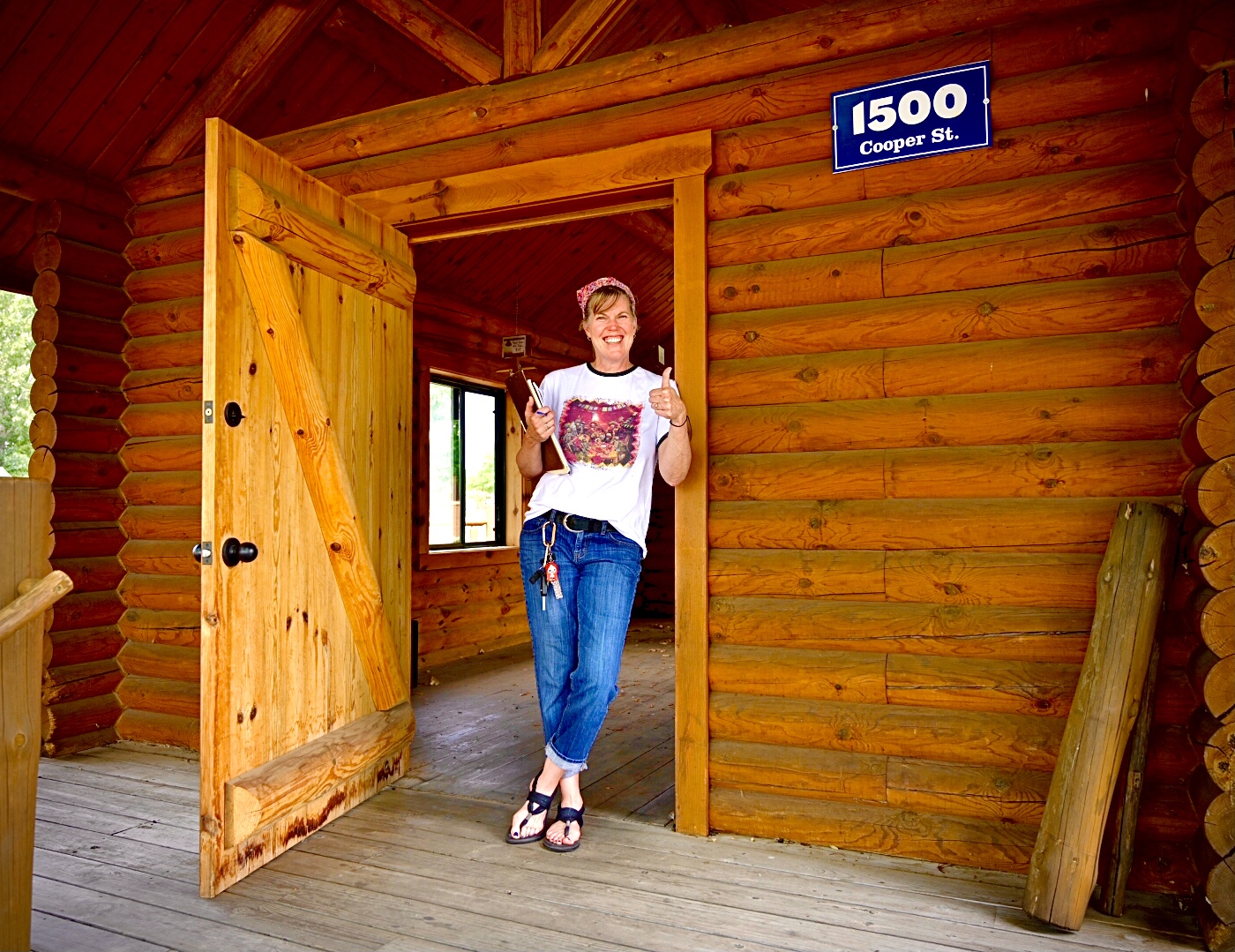
We are prepping for the great Minnesota Get-Together, Aug. 26th through Labor Day! We’re hunkered at our “cabin” in the Northwoods – 1500 Cooper Street. Come on out & see us, but be safe! #mnstatefair
Minnesota Bound, KARE-11 NBC
This Sunday night on Minnesota Bound (5/16/21), happy MN. Fishing Opener!
Classrooms are suddenly swimming! Swimming with conservation work…thanks to Trout Unlimited.
Plus, we help you get started on keeping bees (the big pollinators) and a North Shore fishing trip – Ladies only! Was a super fun show to produce!
Minnesota Bound, 4/18/21
Morel mushroom hunting and maple syrup making…two spring traditions that are VERY Minnesotan! I grew up hunting morel mushroom with my Father in the woods of Iowa. I remember looking for the correct tree, looking down by it’s trunk. I would find 2-3 and my Dad would find 20-20. He also was a champion finding aspargus in the spring months. #Goodmemories #morelmushrooms #maplesyrup Don’t miss more spring stories, airing this Sunday on KARE-11/NBC, 4/18!
Minnesota Bound, airing 1-17-21, KARE-11 NBC
My Father always stressed the importance of educating the next generation in the outdoors….so this Sunday’s lead feature is close to my heart! We meet a teacher who wants to get every elementary school student OUTdoors. This Sunday night, on KARE-11 NBC.
The Daily Reporter – EMMY Winner
Emmy winner
Monday, December 14, 2020
By Randy M. Cauthron, Managing Editor

Kelly Jo McDonnell, and her production teammates recently won an Emmy for her “Boundary Waters at Risk” program which aired on KARE-11/NBC up in Minneapolis. They won for public/current/community affairs program.
Photo submitted
Royal native receives 4th honor for television project
MINNEAPOLIS — Kelly Jo McDonnell, after growing up in the shadow of her Hall of Fame father Jim McDonnell in Royal, continues making a name for herself in the broadcast journalism world after recently winning an Emmy in November for her production work on “Minnesota Bound,” which airs on KARE-11, the NBC affiliate in Minneapolis, Minnesota.
The award winning production piece, a Boundary Waters Mining special, won in the category of public/current/community affairs program.
“We called it ‘The Boundary Waters at Risk,’ and it highlighted the Minnesota mining quandary of Twin Metals wanting to mine copper right on the edge of the Boundary Waters,” she explained. “We covered both sides — can they mine safely, etc. Boy, did we find plenty of opinions … mainly up in Ely, Minnesota, where the whole debate is a pretty hot topic.
She added, “Our whole team got behind this one, led by host Bill Sherck, who loves the area up there, as well as founder Ron Schara, who had retired, but got involved with this show. It’s a topic close to our hearts, that goes without saying. (We film up there often) for the state of Minnesota, it’s a tough topic to beat as far as current community affairs go. But as media, and a television program, we still have to tell both sides … regardless if we’re an outdoor/nature program or not. You have to walk that line. I thought we walked it well — and the Emmy judges thought so, too.”
The honor marked McDonnell’s fourth Emmy. She won her first Emmy for best magazine show back in the 1990s. McDonnell won another with her fiance, Cy Dodson, for best topical documentary for “My Last Breath” in 2015, which was through his production company, Triumph Pictures. She also won in 2018 as producer for “Backroads with Ron & Raven,” which is a show on Fox. The company itself, has probably won over 30-plus Emmy’s over the years.
McDonnell has a B.A. in mass communications from Briar Cliff University in Sioux City — where she played basketball for four years; as well as an M.A. in communications from Bethel University in St. Paul, Minnesota.
McDonnell is the operations director at Ron Schara Productions, a TV production house in Minneapolis, where she started in 1996.
“I got lucky,” said McDonnell, suggesting her father knew the right person.
Her first job right out of college was an on-air job as a DJ at KDWB/WDGY in Minneapolis, working the night shift.
“I was still super excited,” she said. “I had wanted to get right into TV, but Minneapolis can be a tough market to break into … so I bided my time.”
After working in radio for a few years, she worked in agency/public relations work for a year before getting her break.
“My dad called me to let me know he had ‘heard through the grapevine’ that Ron Schara was starting a TV show on NBC/KARE-11 in Minneapolis. Dad, being “The Fishing Professor,” had gotten to know Schara during his many years in the fishing industry.”
At the time, Schara was the full-time outdoors feature writer for Minneapolis Star Tribune, and like McDonnell, was wanting to break into TV.
“So I picked up the phone and called NBC, asked for Ron Schara, and he picked up the phone,” McDonnell said. “Just like that. I went in for an interview the next week, and started work the next. Been there ever since.”
She added, “I love the variety of it. Some days you’re out in the field filming wraps or stories, and other days you’re move into the nitty-gritty production of it; the logging of the video, the writing of the scripts, and wrangling of the reporter’s and their deadlines. I seem to do well with a lot of projects going at the same time. It appeals to both my creative side and my organized side.”
With COVID-19 numbers spiking in Minnesota, McDonnell and her co-workers have pulled back a bit on the filming.
“We still have to do some things, but it’s minimal,” she said. “So I’m hunkered down, mainly logging video, producing ahead on spring/summer stories, and writing ahead. All our events were cancelled in 2020, so I’m on hold with those, too — we’ll see what 2021 brings. We are currently producing and filming for nine or 10 network TV shows right now, ‘Minnesota Bound’ is just one of them. So our plate is still full.”
McDonnell has been a divorced, single mother since before her son Hayden went into kindergarten, so her work/life balance has been tricky on occasion. Hayden, now a senior, spent a great deal of time on the job with her.
“He jokes that he’s ‘grown up on the set’ of ‘Minnesota Bound,’ which isn’t far from the truth,” she said. “He was always with me when our company would do events, such as our TV booth at the Minnesota State Fair … he, literally, has been working that since he was in third grade. He grew up seeing his mother work, but also saw that I enjoyed my work — a lot of the time it was fun.”
McDonnell’s parents, Jim and Almeda, were with her often at company events to help with Hayden, who now a senior in high school, has shown an interest in going into communications. Schara himself wrote reference letters for Hayden while he was applying to colleges this past fall.
“I genuinely enjoy what I do,” McDonnell said. “It helps that I’ve been with the company for so long, and have helped build it up from the ground up. I’ve learned you have to stay curious, always be learning, and that will help you stay engaged.”
McDonnell points to her own upbringing for helping guide her. She grew up with and graduating alongside 22 students whom she still keeps in touch with.
“We still come back to just ‘hang’ in the area, we miss it,” McDonnell said.
Her mother moved to Minnesota after her father Jim passed away in 2012, breaking her last direct tie to the community.
“We have had such good memories in Royal, however, that my son and my brother’s kids love to visit Royal in the summer,” she said.
The trip now includes a stay in a hotel in Spencer which she referred to as “all part of the experience now.” McDonnell said the trip allows them to pay respects to her dad who is buried right outside of Royal. She said the entire family have an Okoboji vacation planned for summer 2021 and they come back annually for her father’s yearly Wild Game Dinner that the Iowa Great Lakes Fishing Club also puts on with them.
“When I go back to visit, I still know everyone,” she said. “Small towns don’t change a whole lot … and that makes you feel real solid. I’m grateful I had that experience. I loved growing up in Royal. There’s something about ‘small-town’ community, and I sure do miss it. I love Minneapolis … but Royal will always be ‘home.’ My father was a teacher/coach, so the school system and sports were a huge part of my life growing up. There’s a discipline to sports, so that helped with the work ethic, also.”
Randy Cauthron
Managing Editor
Spencer Daily Reporter
Northwest Iowa Publishing
712-262-6610 Ext 116
Centennial students “rolling with it”….(Quad Press; Nov. 24th, 2020)
The announcement that Centennial students in grades K-12 will shift from the hybrid learning model to distance learning resulted, unsurprisingly, in conflicting emotions within the community.
The change is hard for Centennial parents and students, as well as the teachers.
Jessica Robinson, a Centennial English teacher since 1998 known as “JRob” to her students, said the reason teachers go into teaching is because of the kids. “Now they are further away from us than they were,” she said, “and it’s hard work to catch back up to them.”
Robinson explained that she and all her colleagues miss the young people in the actual classroom. Robinson has 147 students she teaches in her 9th and 12th grade classes.
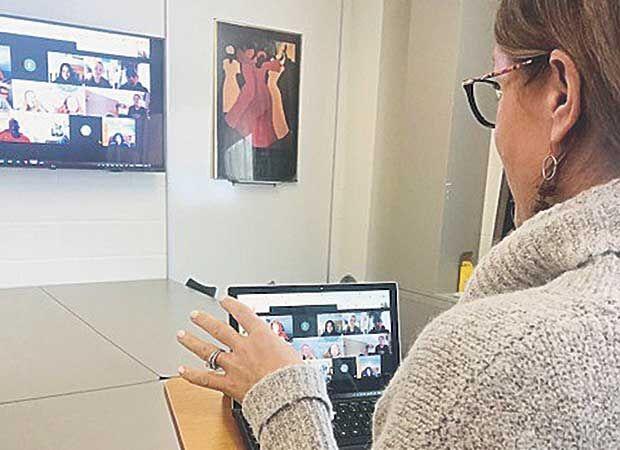
Robinson said the staff has pulled together, but that everyone is experiencing some sort of anxiety. “All of our mental health is being affected by the pandemic,” she said. “It’s an added challenge. The kids are needing that one-on-one attention, but now that’s difficult to supply.”
Shane Rasmussen, a Centennial math teacher since 1993, is also working to adjust while maintaining the same positivity. “Connections are the foundation to good teaching; it’s the reason we all teach. And this learning model is challenging. It’s not just about teaching curriculum. Our teaching is much more than that. It’s being mindful of social and emotional needs.”
Centennial teachers have been prepping and pivoting full time since the pandemic hit. This latest change is another challenge, but one they are ready to meet. Resilience is the word of the year for 2020, and while the teachers are living it moment to moment, they say no one is more resilient than the students.
“It breaks my heart we’re not in the (high school) building,” said Rasmussen, “but I’m amazed at the positivity of the seniors. They are rolling with it. It makes us focus on things we can do something about. We can still do a lot, even though it might not look like how we want it to. We’re moving forward, and there’s hope ahead.”
There are a lot of moving parts in the school system to make this work. Robinson said she is grateful her subject can translate to online instruction easier than other topics. Yet, tasks that were once easy have become cumbersome. While Robinson can pull a PDF of a book they are studying online, there are certain things that are lost.
“When you look at the skills of reading, writing and communication, it’s now all online. Just to get a paper copy to students, logistically, has been a nightmare.”
And even though technology has been a huge player in 2020 education, it brings with it certain barriers for students and teachers. “The lack of nonverbal communication is a barrier,” said Robinson. “If the camera’s not on, it’s hard to create a culture of faith and community space via Google meet. It’s hard enough to do it in a classroom. It takes a long time for kids to share in the classroom, and you’re building relationships, students talking to each other. Building that culture has been more difficult.”
Another big challenge for teachers has been time. “Giving feedback, even chatting with a student is time consuming, and if you multiply that times 147 students,” said Robinson, “that’s 12 hours to assess a piece of writing that is short. I’ve tried to do videos, then save the video upload and email the kids in a message. It all takes time. People don’t understand how much time everything is taking.”
“It’s a long day for all of us,” said Rasmussen, “there’s no teacher that I know of that’s been working (from) 8 to 4. The biggest hurdle that goes along with technology is time. What I’m doing today, crafting individual learning modules, focusing on engagement, scaffolding those lessons together, that all takes time. A lot of time.”
Both teachers and Superintendent Brian Dietz noted that they don’t think education will return to where it was before the pandemic. “The pandemic has changed the way schools operate,” Dietz said.
But sometimes with change comes new inspiration. “Sometimes the knock against education is we don’t change with the times as quickly as we should. We get stuck in ruts,” said Rasmussen. “The pandemic has pushed us to really look at what we’ve been doing. Taking what was good — those connections — and combining that with technology and our creativity and our collaboration is really transforming how we’re going to teach for many years down the road. There’s no doubt in my mind this experience has made us stronger educators. We’re collaborating and sharing more than we ever have in the past. It’s pushed us as teachers, our curriculum and how we deliver that curriculum to students.”
Both Robinson and Rasmussen want to give kudos to parents, who are also struggling with the changes. “Navigating the challenges of being a teacher at home, that is nothing short of heroic,” said Rasmussen, “We’re all in this together, and we’re succeeding the best we can because of our community.
“I’m really proud of our students,” said Rasmussen. “They’ve lost prom, homecoming, graduations last year … I’m so thankful they are resilient. They are just taking and making the best out of a horrible situation. They are rolling with it.”
 Kelly Jo McDonnell