Spring Valley, Minnesota

Midwest Traveler: Spring Valley, Minn., is a little bikers’ paradise

  • Article by: KELLY JO MCDONNELL , Special to the Star Tribune
  • Updated: June 6, 2014 – 9:25 AM


Who knew you could organize a bike excursion complete with caves, car races and a little vino sipping in between? Spring Valley, Minn., can get overshadowed by the other towns along the Root River State Trail, but this town holds its own. So follow the trail down to where the prairie meets the bluffs.

The basics

Spring Valley is a quiet town nestled in southeastern Minnesota’s agricultural heartland. It lies in Fillmore County along the Historic Bluff Country National Scenic Byway.

While road construction is in full bloom this spring, it’s still easy to get to on two major highways, 63 and 18, about 30 minutes from Rochester (1-507-346-7367; http://www.springvalley.govoffice.com).

What to do

If you’re looking to hit some bike trails for the weekend, this is the place: Trails will not disappoint anywhere in this little biker paradise. Spring Valley hosts one of the first self-supported gravel road races in the country, the Almanzo bike race, in which roughly 1,000 cyclists take part.

This Bluff Country region boasts more than 60 miles of paved rail-to-trail multipurpose paths.

The Root River and Harmony-Preston Valley Trails run along the Root River, and riders enjoy scenes from 300-foot bluffs to farms to postcard-worthy bridges, and of course, anglers fishing for trout in the Root River (www.rootrivertrail.org).

If you want a good warm-up for the Root River Trail, there are walking/biking trails right in the town of Spring Valley, where historic houses line the quiet streets.

If you like the action a little louder, head right outside town to the Deer Creek Speedway. On race night, it’s easy to find: Just follow all the car lights to the track, located in farm country on 60 acres (1-507-754-6107; http://www.deercreekspeedway.com).

If hiking is more your gig, head to Forestville State Park. It has a little bit of everything, with trails that climb about 200 feet from valley floors to ridge tops, and horse trails that are a local favorite.

There’s also a little town right in the park, “Historic Forestville” (1-507-765-2785; tinyurl.com/kcdwwod). The Minnesota Historical Society restored a portion of the old town of Forestville, where costumed interpreters portray Forestville residents and visitors can participate in special events, such as a hike up to Zumbro Hill Cemetery.

And don’t skip Mystery Cave, Minnesota’s longest known cave, stretching for 13 miles underground. Guided tours are available every day from Memorial Day weekend through Labor Day. (1-507-937-3251; tinyurl.com/2rze6).

History is important to the Spring Valley area, and visitors can get a taste at the museum at Spring Valley Methodist Church, built in 1876 with the help of the James and Angeline Wilder family.

Their son Almanzo married Laura Ingalls, who went on to write the “Little House” books. Several sites are open for tours (1-507-346-7659; http://www.springvalleymnmuseum.org).

Where to stay

The Glad Gatherings B&B in Spring Valley is a powder blue Victorian creation that offers weekend package deals for groups, geared to scrapbookers. It has a full craft studio in-house (1-507-346-2023; http://gladgatherings.com). Another option is the Spring Valley Inn & Suites, which sits right on the main drag (1-507-346-7788; http://www.springvalleyinnsuites.com).

Camping is also an excellent choice in this area, and Forestville State Park itself offers numerous opportunities (tinyurl.com/m64h7us).

Where to eat

You might think you have to travel to nearby river towns for a wine and dinner experience, but you can head just outside town on Hwy. 16 to Four Daughters Vineyard & Winery for a meal steeped in charm and elegance. The name explains its origins: Parents on the farm started a vineyard to entice their daughters to move back home and help with the wine business. Mission accomplished — and then some.

There’s a wonderful variety of wines, including local favorite Big Boy Blend Red, and the servers (usually family members) know how to pair them with food. As you sip away, you might see the father of the Four Daughters working in the farm fields that surround the grapevines.

The superb food includes fare to nibble with wine, such as artisan cheese boards and olive boards, and roasted green beans and smoked pork belly croutons. Dinner favorites include French onion dumplings (filled with braised onions and Parmesan cheese) and sizzling shrimp, which came doused with a roasted garlic spicy broth, and andouille sausage.

Each week, the chefs create a “Thursday Night Dinner,” a fun, multicourse meal paired with the wines (1-507-346-7300; http://www.fourdaughtersvineyard.com).

If you hanker for a cold root beer and onion rings, stop in at the A&W Drive-In, family-owned and -operated since 1956, with full service that includes jukebox and carhops. The chili dogs might be a nostalgic favorite, but the restaurant also offers Greek salad and some gluten-free options (1-507-346-7486; http://www.awesomeawdrivein.com).


Minnesota = Fishing

Make Fishing Part of Your Minnesota Trip

By Kelly Jo McDonnell

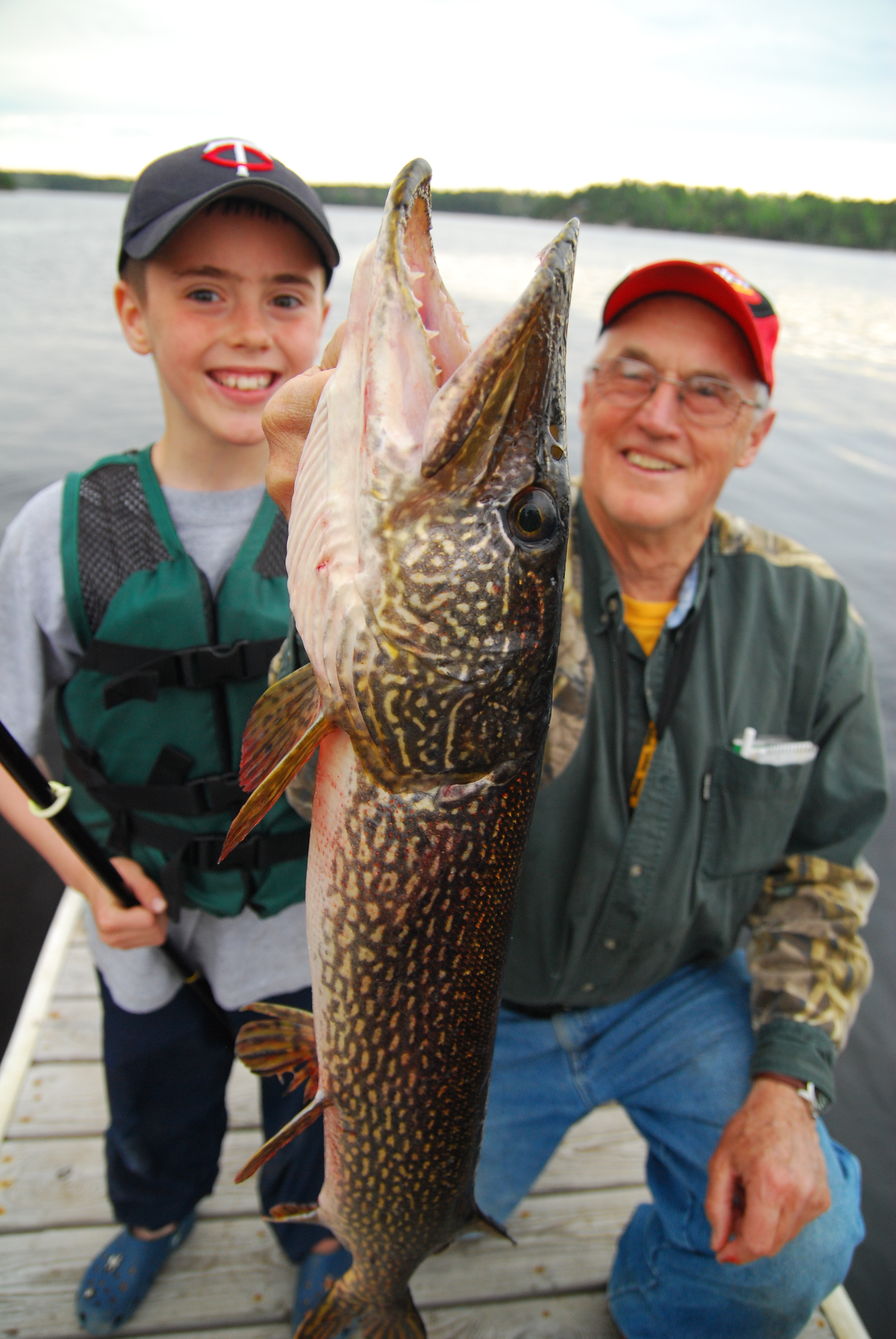
There are three major holidays in the state of Minnesota – Thanksgiving, Christmas and the Minnesota Fishing Opener. Or so goes the saying … and it’s no wonder. Minnesota is known for its fishing.Kelly Jo McConnell fishing with sonIt’s the land of 10,000 lakes (actually even more); it says so right on our license plates! So including a fishing adventure as part of your trip to Minnesota makes perfect sense. It doesn’t matter whether you’re a seasoned angler or a complete novice, the sport of fishing can be enjoyed by all.

It’s easy to include fishing as part of a vacation or quick getaway, no matter what area of the state you’re visiting, including the Minneapolis-St. Paul area. Local visitors bureaus often have information on nearby lakes and rivers; the Minnesota Department of Natural Resources also provides info on lakes and fishing, including the licenses required.

If you want to fish on your own and have your own gear, bait shops are a great source of information on where and how to fish in the local waters. These folks will know what fish are biting and what they’re biting on. Stop in for bait and get the local fishing scoop while you’re there.

If you’re staying at a resort, the staff usually have some great fishing tips. Resort owners and their teams are often diehard fisher-people themselves, and are more than happy to share any wisdom with visitors.

Bait shops, resorts and local tourism bureaus also have the names of local fishing guides in their rolodexes. Don’t poo-poo this idea. If you’re not familiar with Minnesota waters or don’t fish regularly, Mother Nature has a way of depriving you of a catch. Guides can be worth their weight in gold to both casual anglers and seasoned veterans.
Some resorts and guides are able to provide guests some basic fishing gear if you don’t have your own, so check ahead of your trip to see if this is the case.

Fishing GuideWhile I am biased in favor of fishing guides (my father was a fishing guide for years), many resorts and bait shops will point visitors in this direction too, especially on a first trip. They can refer you to experienced guides, and may have worked with them for years. Whether you want to introduce your kids to fishing or enjoy an outing with old fishing buddies, there’s a guide out there who can make the fishing adventure happen.

If you find one who interests you, check out their website, or give them a call to find out rates and more information. Trip rates are usually broken down into full day or half day, and a set number of people. Perhaps you want a shore lunch or shore dinner, which some guides can accommodate. Keep in mind that sunrise and sunset are often the times when the fish are most likely to be biting. Try fishing with a guide early in your trip, and use the tips you get to fish on your own for the rest of your vacation.

“Almost every lake has multiple guides,” says Travis Frank, Minnesota fishing guide and owner of Trophy Encounters. “Tell them what you’re looking for. Looking to catch a trophy? Just have a good time? These are the things we need to know to do our job.”

“Most of the guides out here, we love the outdoors,” he adds. “We love being on the water, and love the opportunity to show somebody our office and playground. It’s what we do.”

To stay on top of the latest fishing news, sign up for the weekly Explore Minnesota fishing report.

To Hoard or not to hoard? That is the question…..

Is your child a hoarder? (MN. Parent Magazine-May issue)

By: Kelly Jo Mcdonnell

How to tell when kid collections become unhealthy

Moss-covered rocks. Dusty LEGO sets. Countless sticks, crammed into a corner. These are the “treasures” of my 11-year-old’s room.

I’m well aware of his love for stuff. It’s a fun ritual when he’ll show me his collection of rocks, cards or erasers. But I’m starting to wonder if his little collections are getting out of control. Desk drawers are chock full of pencils, gum wrappers and toys. Boxes and containers are filled with knickknacks of every kind, including old Christmas decorations he didn’t want to put away.

When I try to get rid of something, he’ll try to grab it out of the garbage, insisting that he still needs it. It got me thinking: Kids don’t hoard like those folks on hoarding TV shows, do they? As I stand in the middle of his room, wondering where to start, I think: Maybe those adults on the TV started out just like this.

When collecting isn’t really collecting

Kids like collecting. In fact, it’s a classic rite of passage for kids and a normal part of child development.

In his book, Stuff: Compulsive Hoarding and the Meaning of Things, Randy Frost explains: “Collecting is very important to kids, starting at about age 2, when they learn the meaning of the word ‘mine,’ up until early teenage years.”

But there’s a fine line between creating collections and hoarding, according to the Bio Behavioral Institute. If your child collects and displays treasures — and is proud of his or her collections — that’s a good sign. And the same goes for kids who are happy to talk about their stuff and want others to be interested in it, too. Healthy collections will be organized (most of the time) and ready for display. Some kids even enjoy budgeting their allowance so they can add to their collections.

Hoarders are different, according to the institute, a private mental health practice in New York. Hoarders associate their collections with embarrassment, and they tend to feel uncomfortable when others see or touch their things. Collecting is something the child wants to do. Hoarding is something children feel they need to do.

Hoarding, according to the American Psychiatric Association, is a complex disorder and is characterized by persistent difficulty discarding or parting with possessions, regardless of the value others may attribute to these possessions.

Different than adult hoarding

Hoarding among kids tends to be more contained than adult hoarding, which can spread across an entire home, according to the New York-based Child Mind Institute.

Children, for example, might hoard under their bed or in areas of their bedroom. And it might not be immediately obvious to an observer because disorganization is so common among children.

Hoarding in kids is more about difficulty letting go, rather than acquisition, according to the Boston-based International Obsessive Compulsive Disorder Foundation. Young kids don’t usually have access to money and transportation that would let them shop all the time. For young children, hoarding may look different, because parents control what kids can buy, and the level of clutter in their rooms.

Parents should watch for intense attachments to objects and the tendency to stockpile items. Stockpiling can include clothing, food, toys, trash (such as gum and candy wrappers), rocks and even cups of sand.

Hoarding can start young

Hoarding affects an estimated 2 percent to 5 percent of the adult population, according to the International OCD Foundation. And the disorder can begin early in life. More than 40 percent of adult hoarders first start showing hoarding behavior by the time they’re 15 years old. Though hoarding behaviors typically start around age 13, children as young as 3 can suffer from the disorder.

Codi Williamson, a third-grade teacher and mother of two in Pataskala, Ohio, said she and her husband constantly struggle with their 4-year-old son’s stockpiles of stuff.

“As long as I can remember, anything that he could fit into a container and carry around, was always with him. He would be obsessed with it,” Williamson said. “He loves grocery bags with handles.” Williamson said her son carries around normal items such as toys and cards, but also keeps used flossers and anything else he can find to jam into a box or bag.

“He doesn’t like to get rid of it,” she said. “About once a month, we go through it, sometimes when he’s not looking.” Williamson and her husband also try to reason with their son to explain why it’s important to let things go.

Panic is a warning sign

If a child doesn’t just protest, but panics when asked to get rid of old, unnecessary possessions or clutter, it can be a warning sign, said Katherine Quie, a child psychologist at Psych Recovery in St. Paul.
“A dead give away is when the child can’t tolerate others touching it or cleaning it up. They feel really panicky at the idea of anything happening to it,” Quie said. “The child is putting too much meaning on belongings. It’s so meaningful, that they literally panic if they get rid of it. They might not want to leave their stuff, so they carry it with them.”

Quie stresses that it’s normal for kids to be upset when they have to say goodbye to some toys, like at a garage sale, or donating an old, favorite stuffed animal. But, she said, parents can usually talk a child through it. “With a child [with hoarding tendencies], all the normal talking through does not work.”

Quie explains that kids will hoard for different reasons. On several occasions, she has worked with young children who hoarded food in large quantities due to food scarcity experiences in their pasts.

“A lot of times,” she said, “the kids don’t understand why they’re doing it.”

Symptoms

According to the New York-based Child Mind Institute, mental health providers check for three principal characteristics when diagnosing hoarding — persistent difficulty discarding or parting with possessions, regardless of their actual value; cluttered living spaces from having so many possessions; and significant distress or functional impairment.

While a rock or stamp collector might search out specific items for his collection, a hoarder will acquire items seemingly at random and then struggle when asked to part with them. The most notable sign of hoarding among children, according to the institute, is the emotional reaction to their possessions, according to the institute. Children with a hoarding disorder are constantly worried about their possessions — so much that it interferes with their functioning and becomes a major source of tension between them and their parents.

Treatment

For children age 8 and younger, psychologists often work with parents to set up a behavioral plan, to first stop a child from acquiring new things and then use incentives to work on gradually getting rid of some of the hoarded objects. For older children, cognitive behavioral therapy can be helpful. Children can learn to understand why they feel compelled to hoard and how to decide which possessions are worth keeping and which should be discarded. Medications can also be incorporated into treatment, according to the institute, which offers a mental health symptom checker at childmind.org.

Prevention

If your child isn’t showing signs of obsessive-compulsive hoarding, but you feel overwhelmed by the amount kid collections in your home (and want to discourage any tendencies toward hoarding), try these tips from Jan Lehman, a professional organizer with Can the Clutter (cantheclutter.com), which serves clients in Minnesota and Oregon.

  • Create a permanent “donate” bin or space in your home to collect old toys and other unneeded items. Teach kids to put toys and clothes in the bin regularly.
  • Be sure all storage containers are easy to use, including open bins versus bins with tight-fitting lids.
  • Organize various spaces with your child. Use timers and make it game: “Let’s see how much we can organize in 10 minutes!”
  • Let your child create a memorabilia box for some of their precious items. Store it somewhere outside of your child’s room.
  • Ask for gifts that provide experiences, rather than toys, such as tickets to a movie or memberships to a museum.
  • Give detailed instructions: “Pick up your clothes and put them away,” instead of general commands: “Clean your room.”

Resources

Kelly Jo McDonnell lives in Lino Lakes with her son, 11. She is a freelance writer and a producer/writer with Minnesota Bound on KARE 11 TV.

 

My Job: Kelly Jo McDonnell, TV writer and producer

  • Article by: LAURA FRENCH
  • Updated: February 24, 2014 – 9:39 AM

By Laura French • jobslink@startribune.com


Kelly Jo McDonnell is a TV writer and producer for Ron Schara’s Minnesota Bound.

Description: http://stmedia.startribune.com/images/220*124/ows_139325626982904.jpg

my job

Kelly Jo McDonnell is often asked, “How do you get a job like that?” Her answer: “It was so long ago!” The Minnesota Bound program started in mid-1995, and by 1996, Ron Schara was looking for his first employee. McDonnell’s father, who worked in the fishing industry, heard about the job and told her about it. “I have a BA in Mass Communications. The few jobs I had before nestling here included working at a TV station, working at KDWB in the Twin Cities, and writing for newspapers and doing PR,” she said. “I picked up the phone, had the interview, and started the next week.”

It also helped that McDonnell is, as she says, “outdoorsy. I grew up hunting, fishing, camping.” In short, she was OK with wearing a lot of hats — even if some of them have earflaps.

Still, she said, back in 1996, “I don’t think we thought we’d be approaching show number seven hundred! When I started we were working with three-quarter-inch tape. Now everything is so fast, everything is electronic, the cameras are tinier. We started with one edit suite, now we have six and are building on that.”

Her job has also changed through the years. “I still produce and write for Minnesota Bound. I also took on commercial traffic for all the shows — there are eight shows now. I continue to do events like the State Fair and the Lake Minnetonka Crappie Contest. Of course, there’s just keeping Ron Schara on schedule. His schedule is very full. I handle all that so he doesn’t have to be bothered by it.”

The company itself has gone through cycles, McDonnell said. “There were glory days before the recessions. In the first half, we really were rockin’. The company was young, and we were upstarts. In the middle part, when we started hiring more employees, there’s a transition period where people are wondering who’s going to do what. I would say when Mr. Schara sold the company five years ago, it breathed some new life into us. I think it was his master plan all along. It’s a new, different focus than what we were used to. But it’s been a good thing.”

What does it take to be successful in a job like yours?

Being flexible to do every step of the process right down to logging hours of video, writing the script, passing it to someone who voices it and someone who edits it. You’ve got to have a thick skin. It can be kind of a grind. You get a lot of negative feedback. You just have to keep on keepin’ on.

Can you recall a favorite story?

We did a story on Seven Pines Lodge, a fly-fishing shack in Wisconsin. I went there with my dad and thought, “Let’s do a father-daughter, ‘We’ve never fly-fished’ weekend.” It was nice to get e-mails from people saying, “I want to do that with my dad or my grandpa.”

What has kept you in the job for 18 years?

We are great storytellers. Mr. Schara was always known for that. I think we believed what we were doing was telling great stories and people liked us. It means something to us. You feel like you’re a part of something important.

Hike, Dine, & spend a night in Jail

Midwest Traveler: Taylors Falls, the little town that could

  • Article by: KELLY JO MCDONNELL , Special to the Star Tribune
  • Updated: November 2, 2013 – 4:14 PM

Description: http://stmedia.startribune.com/images/630*387/ows_137012600252744.jpg

hide

A paddleboat floats down the St. Croix River through Interstate State Park near Taylors Falls, one of the most visited parks in Minnesota.

When you travel into Taylors Falls, you’ll notice a sign that reads population 976. But don’t let this little village on the river fool you. The population swells to 5,000 plus during peak seasons — especially as the fall foliage puts on a show. What do all these people know that we don’t? The answer: Taylors Falls may be small, but what it offers is huge.

Taylors Falls sits right on the St. Croix River, surrounded by bluffs and high cliffs. The scenery is stunning, especially in the fall, and the area’s geology is intriguing. Geologists from all over the world come to visit the area; 10 lava flows are exposed in the area’s park, along with distinct glacial deposits. One thing is for sure: Mother Nature was busy in this area.

WHAT TO DO

This time of year, there’s one logical place to “leaf peep” in Taylors Falls — Interstate State Park. The park was jointly founded by Minnesota and Wisconsin in 1895, since it straddles the border. During early fall, the hiking trails resemble a postcard. While the visitors’ center is now closed for the season, the park recommends taking the 1.25-mile River Trail to the “Glacial Pothole” area, and it proves to be a good choice. Trails are well maintained, and have several lookout areas over the St. Croix. This time of year, the views offer their own beauty, with a palette of green, yellow and brown. On the return journey, try the Railroad Trail, which is a 1.5-mile hike along the path where the old railroad used to run. This trail ends near the Sandstone Bluffs Trail. If you’re not afraid of a few hundred stairs, it’s worth the 1-mile journey for the views. There is also canoe rental and rock climbing in this park. There’s a good chance you’ll spy some rock climbers during your visit (www.dnr.state.mn.us/state_parks/inter state/index.html).

While the government shutdown briefly halted boat excursions in Taylors Falls, and the tours are now closed for the season, Wild Mountain’s Taylors Falls Scenic Boat Tours were up and running just in time for some fall trips. Owner Amy Frischmon, whose family owns and operates all the Wild Mountain properties, had to play catch-up once she got approval from the government to operate her boats again on the St. Croix. Weather-permitting, during the season there are daily excursions on both the Queen and the Princess. Visitors can also view the glacial potholes from the water, and a licensed boat pilot and tour guide point out rock formations, including the Old Man of the Dalles. A seasonal note: When the snow flies, the action switches over to Wild Mountain, the area’s ski and snowboard resort (www.wildmountain.com).

While it’s not located on a mountain, Wild Mountain Winery is picturesque, and located just 8 miles from Taylors Falls. It specializes in cold-hardy grapes from grower Elmer Swenson. All the grapes are locally grown, the wine locally produced, and the winery itself is also locally operated, which gives the scene an overall homey feeling. Wandering through the vineyards in the fall offers a chance to see the picking process. The vines, full and heavy with grapes, are being harvested all fall. The wine tasting room, which used to be the greenhouse, is cozy and offers samplings of Prairie Star, Frontenac Gris or the ever-popular Elmer’s White, which is wonderfully fruity and aromatic (www.wildmountainwinery.com).

Visitors can also just walk along the river and enjoy the charming shops in downtown Taylors Falls. The shops are locally owned, including the Newbery House, a gift shop that also doubles as an art gallery featuring works from local artists (www.delarosegallery.com). If natural art is more your style, try the GLG Jewelry and Rock Shop, which designs and creates “Earth Treasures” from rocks and minerals. Both adults and kids will find a rock treasure in this shop (www.glggemstonejewelry.com).

WHERE TO STAY

Why not spend the day in jail? No, it’s not what you think. And the Old Jail Bed & Breakfast, right in downtown Taylors Falls, is the perfect place to feel right at home — even if it used to be a jail. It’s the first licensed bed-and-breakfast in Minnesota, with three suites that have a private entrance, private bath and kitchen. The “overlook” room is just that — overlooking the St. Croix National Scenic Riverway. To experience the “lock up,” book the “Jail Cottage,” complete with the original bars. But guests seem to clamor for the “Cave.” This former location of the town saloon is roomy, and has the original stone arch leading to a “cave” where there’s a full bathroom (www.oldjail.com or 651-465-3112).

WHERE TO EAT

If coffee or cappuccino is on your mind, be sure to hit the Coffee Talk in downtown Taylors Falls. It sits in a renovated Victorian house on the north side of town, and the locals who work the coffee bar are the perfect folks to ask about the best local stops. There are also fresh baked goods each day (www.taylorsfalls.com/coffeetalk.html). Rocky River Bakery, owned by Bill and Beth Hughes, is full of fresh baked pastries and breads, and this time of year a visitor can find the “Croixnut” — a cross between a doughnut and a croissant. But ask ahead, as the Croixnut tends to sell out fast (www.rockyriverbakery.com). While it has seasonal hours, Tangled up in Blue is worth the visit. The interior is simple and perfectly lit for either a dinner for two or a party of 10. The food is fresh, and the chef often visits your table to check on your dining experience. The beef Wellington is one of the house specialties, and for good reason — it’s a hand-cut filet topped with mushroom duxelle and enclosed in a puff pastry. Local wines from nearby vineyards are also offered (www.tangledupinbluerestaurantintaylorsfalls.com).

IF YOU GO

For more information about visiting the region, go to http://www.ci.taylors-falls.mn.us/ or http://fallschamber.org/

Little green school

DSC_0326

 Go green! Everyone has heard the slogan. Even my tween son knows the term, and better yet, he understands it. When his classroom was in charge of “Earth Day Celebration” ideas at his elementary school, he proudly organized a pick up trash hour in our neighborhood (with his mother leading the expedition, of course). It was a great lesson, and I hope that my son and his class will think twice about littering because of that experience.

But how about thinking bigger? Perhaps going green with—of all things—your child’s actual school?

It’s not such a far-fetched notion. Just ask Kirsen Kinzler, director of the Natural Science Academy in St. Paul Park. “Science is all around us, and it’s how we understand our environment,” stresses Kinzler. “When kids say they aren’t that good at reading…they still have to read. When kids say they aren’t good at science, well, the science is all around them. It’s how they are going to understand their environment, and it’s what happens in our world. Children need more of that in their background.”

The Natural Science Academy is a local environmentally focused charter school that opened in 2007 in Woodbury with an enrollment at 38 students. The school re-located to St. Paul Park after two years, and student enrollment holds steady at 55. “We’re a small community,” explains Kinzler, “so our biggest challenge is letting folks know that we’re here.”

Science, science, science is the name of the game at the Natural Science Academy. Kinzler says in other schools, children are lucky to be able to explore the topic once a week. “We do science every day, at least 45 minutes or more,” she explains. “In our school, that’s the focus. Biology science, earth science, and natural science.”

Nature is tough

When I tagged along during one particular class, the second and third graders were heading to the outdoor classroom to play a game that involved wolves and rabbits and deer. No, not real animals. Each child was issued a tag for their coat that labeled them as Deer, Wolf, or Rabbit. As the teacher was explaining the class activity—“do wolves always catch prey the they are after?” I noticed a group of boys already fist bumping that they were “wolves”—the top of the food chain in this game. The “wolves” were to hunt the deer and the rabbits; they could catch a deer with two hands, and rabbits with one. When the teacher blew the whistle, I’ve never seen so many “animals” scatter so fast.

“They know how hard it is for wolves to catch their prey,” says teacher Laura Ferguson, “and we are talking more about wolves for the next week. They’ll also learn about what happens if wolves don’t get their prey, and what happens if something happens to their habitat.” When I was leaving, I noticed the pack of boy-wolves looking a little disgruntled; hunting turned out be harder then they thought, perhaps. No more fist bumps for these wolves. Nature is tough.

A quick look into the kindergarten room (otherwise known as “the owls”) showed that the class was learning about different animal tracks. When the teacher asked how the bunny track was made, one enthusiastic little boy jumped up and began hopping around the classroom. Soon, the entire classroom was putting on coats to find and view real tracks outside.

You won’t find these kids looking out the school windows longingly. Their classroom is outside a lot of the time. “We go outside at least one hour a day: it’s part of the classroom,” says Kinzler, “and on top of that, we go outside for reading, or journaling.” She says a new feature for this school session is their official “outdoor classroom space,” which includes paths, shelters, and gardens. The kids will help with the upkeep during the changing seasons.

Incorporating “green”

The little green school idea is something more schools should consider, but if it isn’t an option, perhaps other “green” actions can be incorporated. How about encouraging your child to join a green-focused club or committee? If your child’s school doesn’t have one, how about starting rallying the troops in a parent-volunteer effort around an issue such as recycling or composting food waste in the cafeteria? Your child can also volunteer with the building operations, such as helping with the recycling or trash pickup around the school. Another option is consulting with the teacher. It may take a bit of creative thinking, but to repeat what Kirsen Kinzler said earlier: “Science is all around us.” So how can that be incorporated into everyday teaching? In art—could it be using eco-friendly art materials or employing a focus on recycling paper through a collage project?

Or what if it’s just you, making a difference with your children? If they have to give a speech in school, for example, could it be on a topic related to the environment? What about when they need to write an essay of their choice? How can you direct your child to incorporate a little green school into the schoolwork he or she does?

For older kids, taking on a service learning internship can be ideal. The Twin Cities area has a wealth of nature centers and arboretums. In our backyard in Lino Lakes, there’s the Wargo Nature Center, which my son is already interested in contacting for some hands-on experience.

“I just see what the outdoors does for kids,” says Kinzler, “and getting them out and into those experiences. Those are the things that they remember. They need to be literate and know their math, and be successful and get jobs…but it’s just adding that other piece in. It helps them to know where they come from, and what’s around Minnesota. Our state is great for that, because we have all the seasons and different sports. Those are some of the best experiences.”

Little green school…fist bump.


Resources

Natural Science Academy

naturalscienceacademy.org


Eco-friendly art materials

dickblick.com/green

A tale of two bridges

 4 (1)

In Hastings, Minn., history and natural beauty

If you’ve driven on Hwy. 61 into Hastings, chances are you’ve heard the Tale of Two Bridges (not to be confused with Dickens’ “Tale of Two Cities”). A new, four-lane bridge — which was built off-site and floated into place — will replace the old two-lane bridge by the end of the year, and two lanes on the new structure are already open. Don’t let orange cones deter you from visiting this river town, with a downtown lined with historic buildings, river views and a roaring waterfall.

If there ever were a true river town, it’s Hastings. Set along the Mississippi, St. Croix and Vermillion rivers, it’s one of Minnesota’s oldest communities, established in 1857. And while this area has had its share of progress, the scenery still remains steeped in its history.

Why go now

The Afton Apple Orchard, just outside of town, does double duty. In addition to apples, you can pick your own pumpkins beginning this weekend (651-436-8385; http://www.afton apple.com).

WHAT TO DO

Downtown Hastings has 35 buildings built between 1860 and 1900 that make up a historic district along the banks of the Mississippi. Shops include Mississippi Clayworks, which sells locally made pots and Pueblo pottery (651-437-5901; http://www.mississippiclayworks.com); Second Childhood, a toy store with a resident cat named Slinky (651-438-7949; http://www.secondchildhoodtoys.com) and Reissner’s Meats & Grocery, a classic third-generation butcher shop (651-437-4189). Locals claim that items in Hastings antique stores cost as much as 15 percent less than in other river towns. More information at http://www.hastings downtown-mn.com and http://www.hastingsmn.org.

Spring Lake Park Reserve, also known as Schaar’s Bluff, is a hidden gem in this Upper Mississippi River Valley area. Don’t let the cornfields fool you as you drive to this Dakota County park. The landscape changes quickly from farmland to bluff country. And once you hit the trails, the views are spectacular. This part overlooks the Mississippi. Its trails include the Schaar’s Bluff Trailhead, where views stretch to the Twin Cities. Locals say it’s the premier place to catch a sunset.

Trails at the park pass over rocky hills and through woods, grasslands and fields of wildflowers. Paved paths overlook the water. Once the snow flies, trails are groomed for cross-country skiing. The park includes Schaar’s Bluff Gathering Center, an airfield for model planes and picnic shelters (952-891-7000; http://www.co.dakota.mn.us/parks/parksTrails/SpringLake).

The Alexis Bailly Vineyard has been growing grapes since 1973, when the family planted the first vineyard in Minnesota. Today, second-generation owner Nan Bailly continues the family heritage of producing wines in a difficult climate.

First-class wine connoisseurs stand behind the sampling counter, ready to pour. The building, with oak barrels lining the walls, is inviting. Outside, visitors can play bocce ball or stroll through the sculpture park.

Guest favorites include the Country White, a full-bodied table wine made from University of Minnesota grapes La Crescent and Frontenac Gris, and the Voyageur 2010, a red that ages in oak barrels for 12 months. The vineyard is just a mile from Hastings, off Hwy. 61 (651-437-1413; http://www.abvwines.com).

WHERE TO STAY

The Classic Rosewood Inn and Spa is a piece of Hastings history, and it looks the part. The B&B’s building is an 1880 Queen Anne landmark, and it’s just four blocks from downtown.

Owners Dick and Pam Thorsen stress, “slow the pace and snuggle in.”

The atmosphere is easy, even allowing guests to set the schedule for breakfast, which they can have at a private table in the dining room or in their room. Never a small affair, the breakfast during my stay was a three-course feast that included an egg and hash-brown bake, fresh fruit and a baked apple pastry. The Rosewood also offers massages in a room on the main floor. There’s another bonus: a charming “help yourself” pantry for midnight snack attacks.

Rooms include “Spring Lake,” which has two levels with marble steps leading up to the whirlpool and bathroom; and the “Solarium,” with 15-foot walls of glass that overlook the town (651-437-3297; http://www.classicrosewood.com).

WHERE TO EAT

Locals and tourists alike line up outside the Onion Grill, where great onion-inspired dishes are only part of the draw. Owners Mike and Wendy Agen have created a fun atmosphere, with a model train circling the restaurant’s interior and big picture windows that look out at the river’s edge downtown (651-437-7577; http://www.theoniongrille.com).

Looking for the best steak sandwich around? Head to the Bierstube for fabulous German food. The wiener schnitzel, bratwurst platter and sauerbraten (marinated roast beef) are highlights of the menu. It’s a big local hangout, and the “Larry’s Special Steak,” named after the restaurant’s founder, Lawrence William Yanz, is a favorite (651-437-8259; http://www.thebierstube.com).

At the Busted Nut, peanut shells cover the floor like carpet. The restaurant serves casual fare like “big kids” mac and cheese and homemade pizza and has live music year-round (651-438 -6887; http://www.thebustednut.com).

 IF YOU GO

http://www.hastingsmn.org

http://www.ci.hastings.mn.us